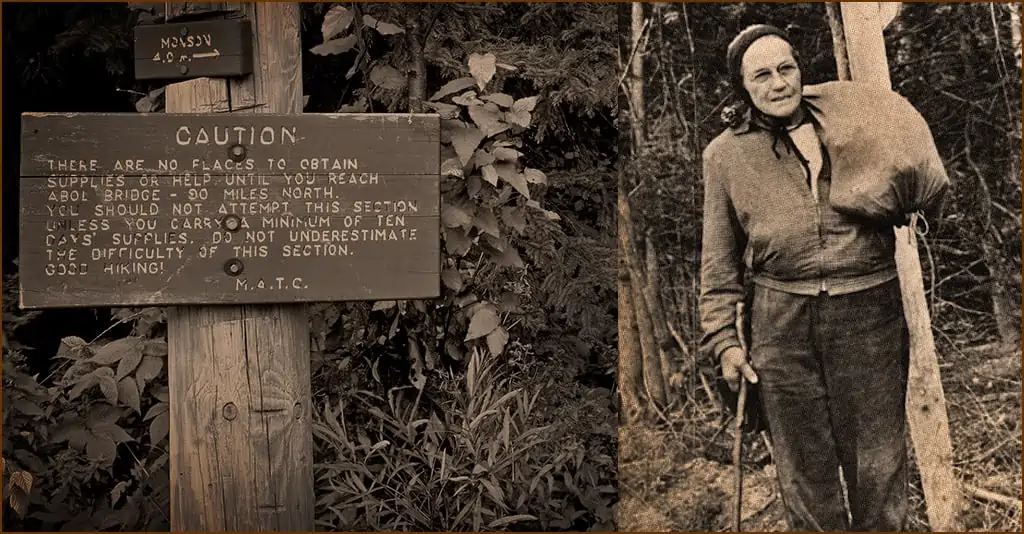
Her first effort to conquer the Appalachian Trail was a failure that taught her lessons that brought her success as the first woman to ever accomplish the feat.
When, one hot day in July of 1954, Emma Gatewood told her grown kids she was “going for a walk,” she left out a few details. She expected the walk would take her from Maine to Georgia, cover 2,108.5 miles and go through 14 states.
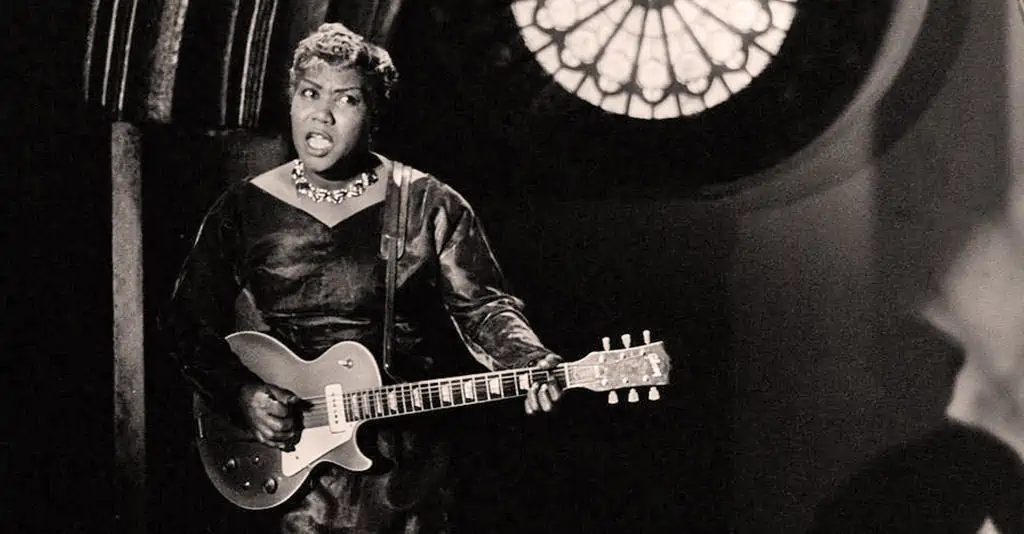
In the 1940s, Rosetta Tharpe brought to the stage a completely new kind of music and performing style that was later imitated by Chuck Berry, Little Richard, Elvis Presely and the pantheon of rock stars up until today’s. But she got little credit for her history-making work.
When Sister Rosetta Tharpe picked up her electric guitar in the 1940s and lit into “Strange Things Happening Every Day,” she didn’t know she was creating a musical style that would become an international sensation. But today, this audience-taunting, duck-walking, howling, stomping, gospel-singing black woman is known as the Mother of Rock and Roll.
Despite her hardscrabble early life in Richmond, Va., Maggie Lena Walker used her business acumen to build a small financial empire focused on supporting Black enterprise, civil rights and women’s rights at the turn of the 20th century.
In 1903 in Richmond, Virginia, Maggie Lena Walker knocked the banking industry on its ear. She founded and became president of a bank, making her the first female bank president in the history of the United States. In an age when the financial services industry was captained by wealthy white men, her achievement was even more noteworthy given that Walker was the daughter of two former slaves.
America’s most prominent female scientists in the second half of the 19th century, Vassar Professor Maria Mitchell is shown here in the 1880s with students from her astronomy class.
She is the only champion of women’s rights in the last two centuries to have both a crater on the moon and an asteroid named in her honor. Maria Mitchell was a star of 19th century American science who used astronomy to expand the boundaries of what women could expect and achieve. Her life and work are a root of the Science, Technology, Engineering and Math (STEM) movement that today draws ever larger numbers of young women to scientific careers. But, ironically, Mitchell is not well know to most of them.
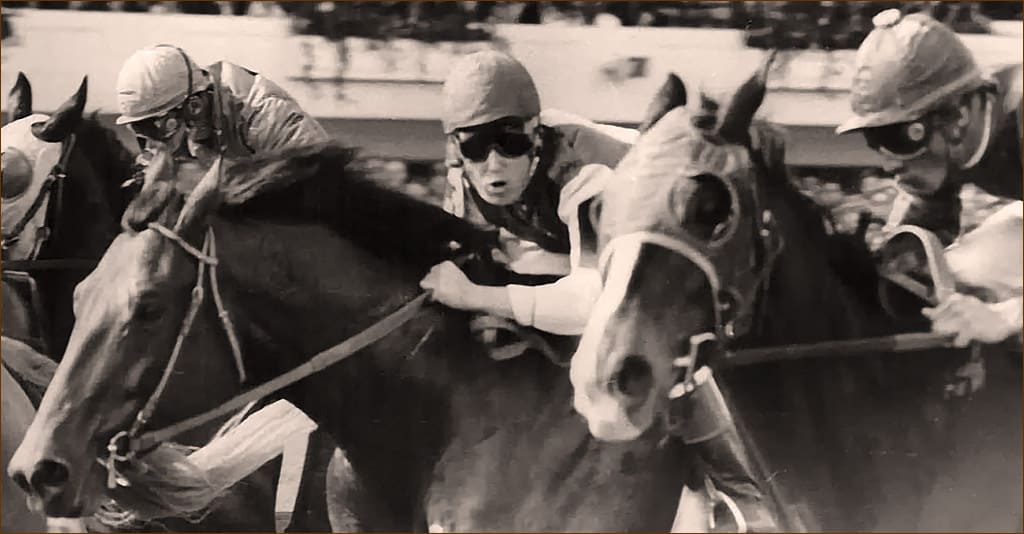
Riding Bridle ‘N Bit in the 7th race at Hialeah Park on February 7, 1969, Diane Crump (center) smashed through the barriers that kept women from participating in the sport of thoroughbred racing.
Until the 1960s, gender discrimination was a proud fact of life in the male-only world of thoroughbred horse racing in the United States. Females could not be licensed as jockeys. But a gutsy, 5-foot tall, 104 pound slip of a woman named Diane Crump changed all that at Florida’s Hialeah Park in 1969.
Destitute and desperate, former charm school teacher Annie Edson Taylor went over Horseshoe Falls in a barrel in 1901 and cashed in on her brief celebrity selling books, photos and talks about herself. Later institutionalized, she died penniless.
Talk about a tough old broad. Annie Edson Taylor was the first, and the oldest, person to survive a tumble over Niagara falls in a pillow-padded barrel of her own design. At a time when women were expected to be docile, delicate and fragile, Annie Edson Taylor was a fearless, foolhardy badass.