And Their Roles in Creating and Maintaining the Highway’s Kitschy-Americana Environment
Lillian Redman ran the Blue Swallow Motel in Tucumcari New Mexico along the famed Route 66, a 2,448 mile highway of kitschy-Americana buildings that crossed eight states to connect Chicago to Los Angeles.
John Steinbeck dubbed it the Mother Road in his 1939 Pulitzer Prize-winning novel, Grapes of Wrath. In 1946, singer Nat King Cole invited Americans to get their kicks on Route 66. And in 1972, the you could find the Eagles “standin’ on the corner in Winslow, Arizona.”
Self-Taught Artist and Savvy Business Woman Who Invented the First Novelty Toy Distributed Worldwide
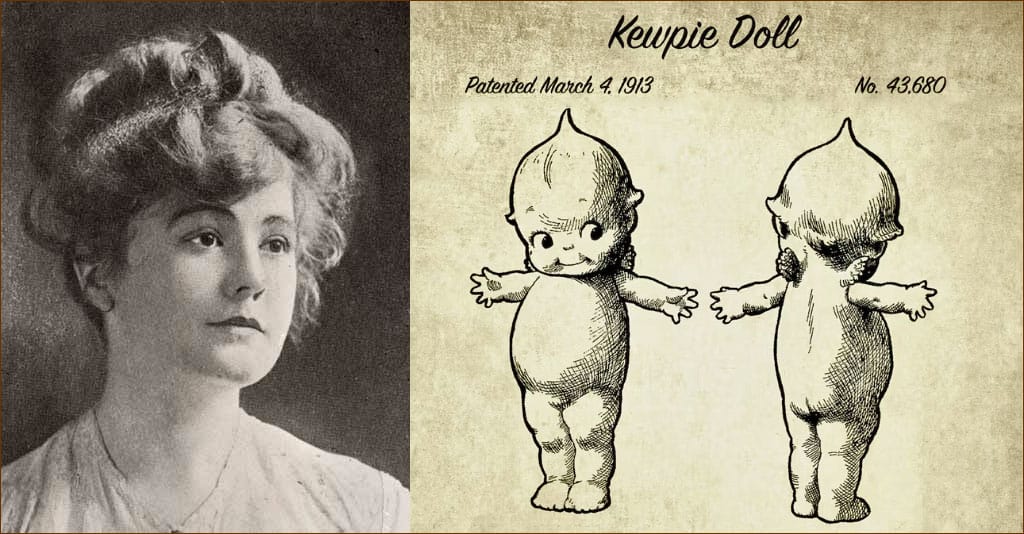
In the turn-of-the-century world of artists and illustrators that did not welcome women, Cecelia Rose O’Neill broke through as a superstar producer who created the first novelty toy distributed worldwide. It made her fabulously wealthy.
Cecelia Rose O’Neill was many things … self-taught artist and sculptor, author and poet, suffragist and, for a time, one of the world’s richest women. But to most people, she was the woman who birthed “The Kewpies” — plump little cartoon characters and world-famous dolls with top knots, rosy cheeks, broad smiles, and sidelong eyes. Debuting in 1909, Kewpies were the world’s most widely known cartoon character until a guy named Disney introduced us to a cheeky mouse named Mickey in 1928.
From the Slums of Martinique to the Top of Harlem’s Numbers Rackets
Queen of the numbers rackets during Harlem’s Renaissance, Stephanie St. Clair was an outlaw as well as an entrepreneur and Civil Rights Advocate.
The Harlem Renaissance of the ‘20s and ‘30s was a hotbed of African American music, dance, art, fashion, literature, politics, and scholarship. It gave us luminaries like Langston Hughes, Josephine Baker, W.E.B. DuBois and Jessie Redmon Fauset. But for many, when it came to Black identity, community and the everyday experience of Black people, a woman named Stephanie St. Clair loomed large.
She was Still Making Internationally Acclaimed Hats When She was 100
Vanilla Beane, who ran Bené Millinery & Bridal Supplies, was a beloved figure in Washington, D.C., and her hat creations were internationally famous.
She was a fashion icon, successful entrepreneur, mother, grandmother, and great grandmother — and a centenarian businesswoman with a name so charming you can’t help but smile.
A Black Hatter Whose Work Became the Buzz of Hollywood Studios
Mildred Blount in her workroom creating the hats for the 1939 movie “Gone With The Wind,” and Vivien Leigh wearing one of them in her Scarlett O’Hara role in the film.
When Crowns: Portraits of Black Women in Church Hats, by Michael Cunningham and Craig Marberry was published in 2000, it honored a tradition deeply rooted in African American culture. One that poet Maya Angelou simply called, in her foreword to that book, THE HAT. And for Mildred Blount, THE HAT was always about more than just headwear.
How a Childless Widow Who Didn’t Like Kids Became a Star of Children’s Radio
A turn-of-the-century vaudeville performer, movie actress, and screenwriter, Nila Mack got involved in radio in the 1930s, was hired to oversee a children’s show, and turned that show — “Let’s Pretend” — into a national hit that ran for 20 years.
Once upon a time, a “large, plump, hard-boiled, shrewd” woman named Nila Mack was asked by Columbia Broadcasting System to reinvent a Saturday morning children’s radio show called “The Adventures of Helen and Mary.” Her first reaction? “Really? You want the childless widow to save your kids’ show? I don’t even like kids.”