Funded by the WPA during the Great Depression, horse-pack librarians took books and magazines to people living in remote Appalachian mountain settlements often reachable only by foot paths.
Determined to increase literacy and boost morale in the backwoods of Depression era Appalachia, hundreds of Pack Horse Librarians, with saddlebags jammed full of books, headed out for some of county’s most impoverished and isolated communities.
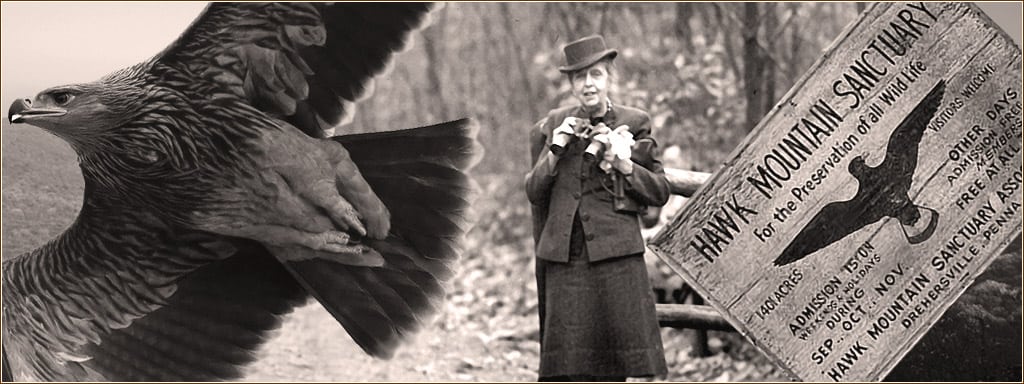
Rosalie Edge was one of the most active and effective conservationists of the 20th century, with a particular interest in protecting wild birds from mass killings by agricultural and industrial interests.
If visitors to New York’s Woodlawn Cemetery in the Spring of 2018 felt the ground shift a little beneath their feet, it was probably just Mabel Rosalie Barrow Edge — once known as America’s most militant conservationist — rolling in her grave.
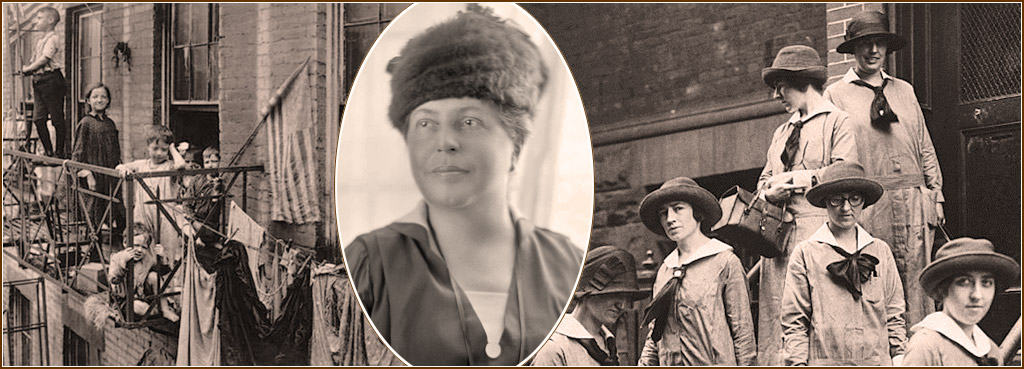
A high society girl who abandoned her upper crust life to become a nurse in the 1880s, Lillian Wald and her corps of public health nurses changed the world of health care in the teeming immigrant slums of New York’s Lower East Side and established a new mode of nursing focused on the poor that spread across the country.
We hear a lot about privilege these days. And this Wednesday’s Woman, Lillian Wald, would be the first to tell you she was born into privilege — the daughter of wealthy German-Polish parents whose families fled Europe seeking economic opportunity. She once described herself as a well-educated, frivolous, spoiled socialite. But two pivotal events shaped this frivolous, spoiled socialite into a humanitarian and visionary who dedicated her life to helping others.
Above is Bessie Virginia Blount Griffin’s patent for an invention that enabled paralyzed or limbless veterans of World War II to feed themselves.
That Bessie Blount Griffin became a inventor, physical therapist, business women, forensics expert and social activist before she passed on in 2009 is all the more remarkable, given that she was born in an era before women — particularly African American women — could expect opportunities in any one of the multiple fields in which she ultimately succeeded. Her life is a lesson in tenacity, irrepressible creativity and a deep sense of empathy for the people and causes she helped.
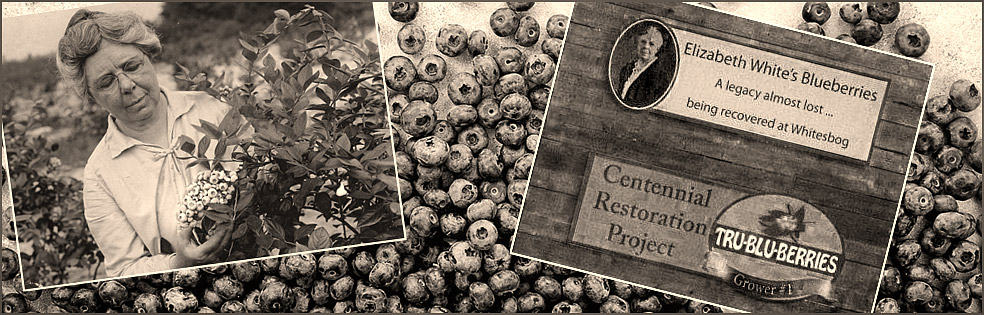
In the second decade of the 20th century, New Jersey Pinelands farmer Elizabeth Coleman White was the first to cultivate the blueberry on a commercial scale. Today, the U.S. industry she launched annually harvests 690 million pounds of berries from across half a million planted acres.
Hammonton, New Jersey, is the Blueberry Capital of the Garden State. Once upon a time, sixteen-year-old Kellyanne Fitzpatrick Conway was crowned Blueberry Pageant Princess. And we all know Fats Domino found his thrill on Blueberry Hill. But were it not for Elizabeth Coleman White, none of that would have happened.
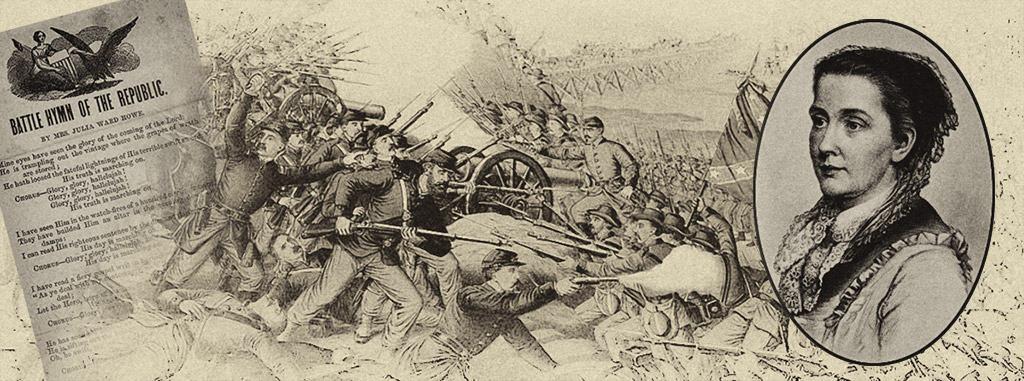
Inspired by the human horror, anguish, and sense of national purpose she experienced during visits to Union Army encampments and hospitals, Julia Ward Howe wrote what became one of the most powerful and famous songs of all time.
Little did Julia Ward Howe know that in writing what became the anthem of the American Civil War in 1861, she emancipated herself from the narrow, 19th-century views that kept women in domestic confinement, and realized her long-held ambition to become a thinker, a writer and an individual on her own terms.