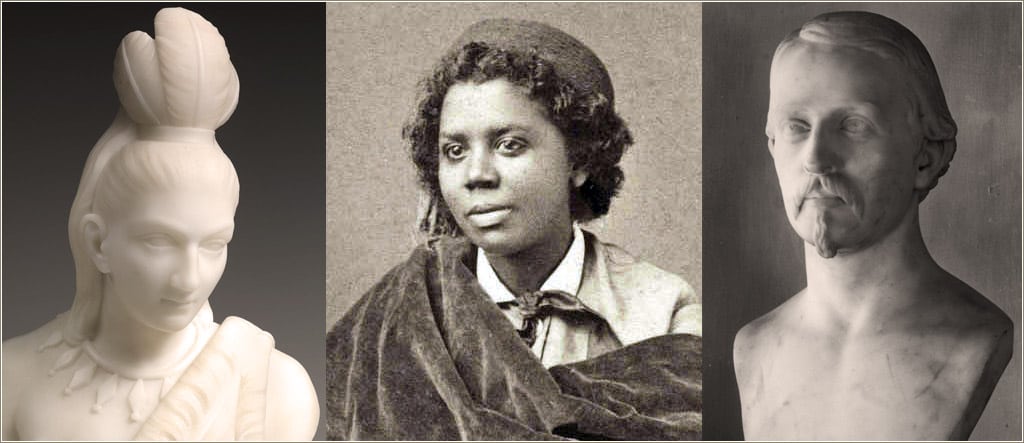
Unable to follow her dream of being a fine art sculptor in the U.S., Edmonia Lewis moved to Italy and became the first mixed-race fine art sculptor to achieve international fame with her marble works. At left is her sculpture of Minnehaha, the husband of Hiawatha; at right her bust of Col. Robert Gould Shaw, who led the Union Army’s celebrated 54th Regiment of African American soldiers.
The life story of Edmonia Lewis, a Civil War-era mixed-race orphan who succeeded as an artist only after she expatriated herself to Italy, is a tale of personal triumph in the face of seemingly insurmountable odds. And it’s one that makes for a poignant Wednesday’s Woman episode.
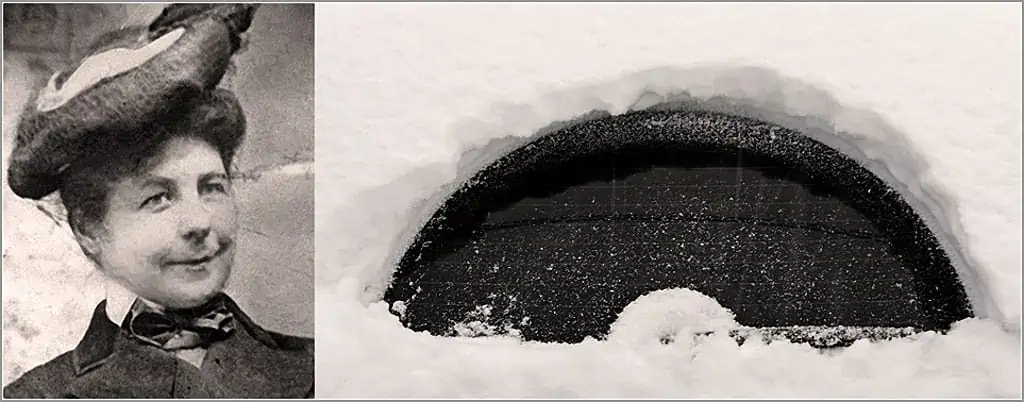
Real estate entrepreneur and cattle ranch operator Mary Anderson came up with and patented the idea of windshield wipers in 1903, years before Henry Ford’s Model T Ford hit the market.
If you’re reading this from anywhere along the east coast and dealing with the after-effects of our New Year’s “bomb cyclone,” you know how annoying that highway spray of grime, salt and slush kicked up on your car’s windshield can be. Meet today’s Wednesday’s Woman, Mary Anderson (1866-1953), the female inventor who created the common, everyday, indispensable windshield wiper.
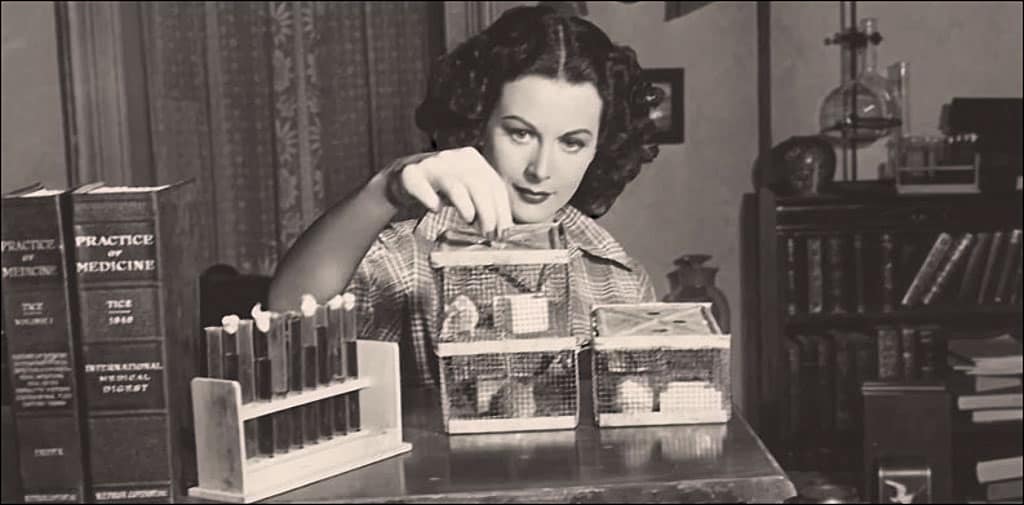
In parallel with her Hollywood fame, Hedy Lamarr was a constant tinkerer and successful inventor who contributed significant innovative engineering ideas adopted by the U.S. military and consumer industries. In 1997 Lamarr’s engineering work was honored with the Electronic Frontier Foundation’s Pioneer Award and in 2014 she was posthumously inducted into the National Inventors Hall of Fame.
Whoever coined the phrase “more than just a pretty face” could have been describing this Wednesday’s Woman. Hedy Lamarr, the exquisite Hollywood beauty of the 1930s and ’40s, was born into an Austrian Jewish family as Hedwig Eva Maria Kiesler in 1914. She would ultimately go on to become the Hollywood star we all know, as well as a highly successful engineering innovator who most of us were never aware of.
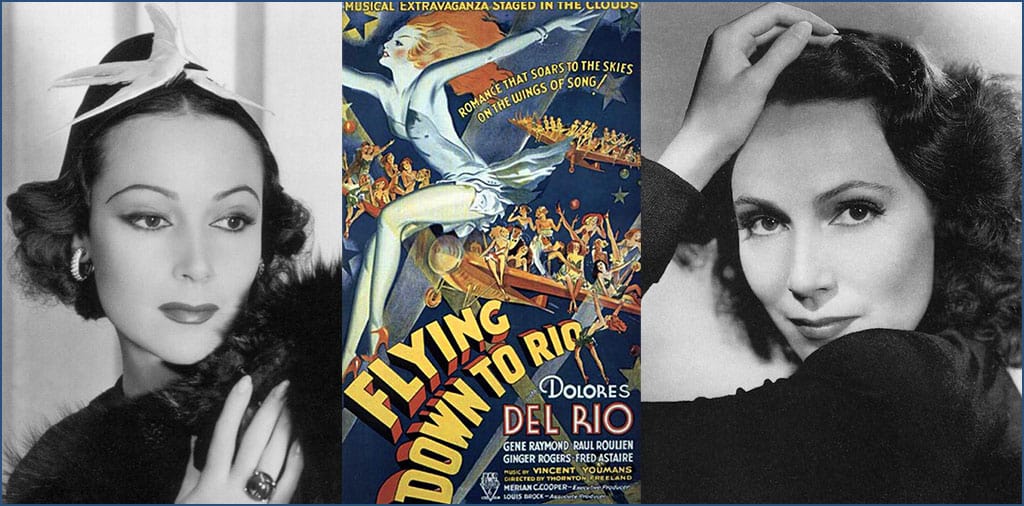
Mexican actress Dolores Del Rio was a U.S. trailblazer for Latino actors and one of the most glamorous Hollywood performers of the first half of the 20th century.
You may know the names Salma Hayek, Penelope Cruz, Sofia Vergara and Eva Mendes. What you may not know is that these Latina actresses stand on the shoulders of this Wednesday’s Woman. Her given name was Lolita Dolores Martinez Asunsolo Lopez Negrette. But film buffs know her as Dolores Del Rio. Born in Durango, Mexico, she was one of the most beautiful women to ever grace the silver screen. In fact, Irish author/playwright George Bernard Shaw once said of her, “The two most beautiful things in the world are the Taj Mahal and Dolores Del Rio.”
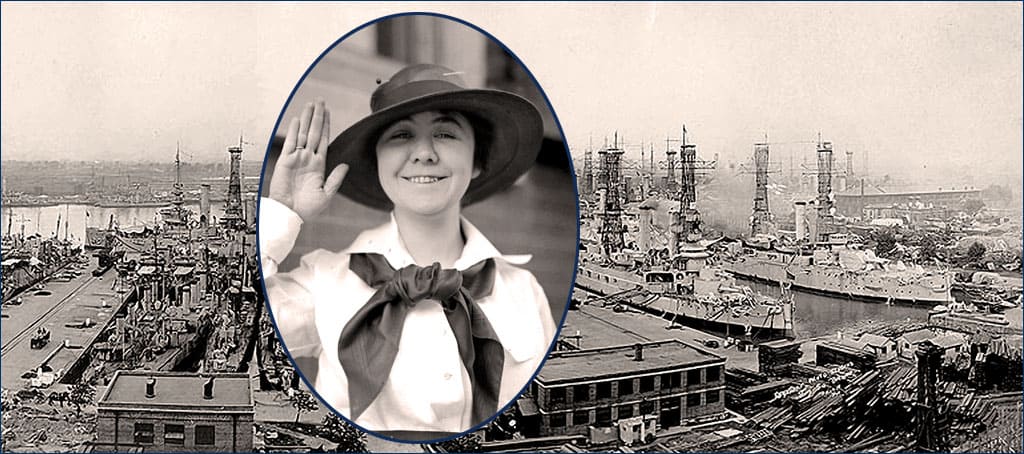
When Loretta Perfectus Walsh became the first women to enlist in the U.S. Navy in 1917, that service didn’t yet have uniforms for female sailors. She served as a yeoman at the U.S. Navy Yard in Philadelphia (background photo).
In 1917, twelve words opened the floodgates for women to serve in the military: “It does not say … anywhere that a Yeoman must be a man.” One year after the U.S. Naval Reserve Act of 1916 allowed qualified “persons” to enlist, history was made when 20-year-old Loretta Perfectus Walsh (1896-1925) did just that, earning herself a whole series of “firsts” in the process.
In the middle of both background images, a young Susan La Flesche is shown in the two different worlds of her 19th-century life. The mature Susan La Flesche in the foreground is the woman who became the first Native American physician.
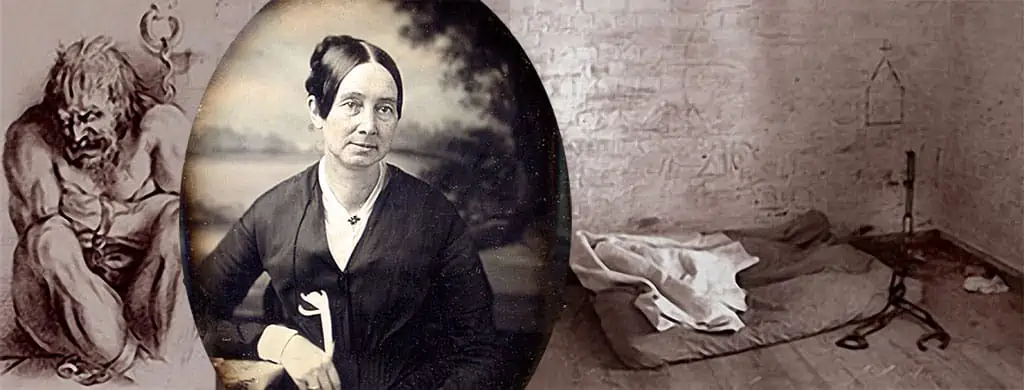
The idea that “it was only an Indian and it did not matter” if a person received adequate medical care or not changed the life of Dr. Susan La Flesche Picotte (1865-1915), the first Native American woman in the United States to receive a medical degree. Continue reading “Susan La Flesche Picotte: America’s First Native American Doctor”