Beginning before she was a teenager, Venezuela-born classical musical prodigy Teresa Carreño sold out major music halls in the U.S. In an age that was intolerant of female composers, she went on to become one of the world’s most celebrated.
Music gave us The King of Rock ‘n’ Roll, The Duke and, of course, The Boss. But long before Elvis swiveled his pelvis, Ellington tickled the ivories and Springsteen picked up the guitar, the music world was captivated by The Valkyrie of the Piano.
Born on a South Dakota Sioux Reservation, the young Gertrude Simmons was pulled between the Indian culture into which she was born and the Euro-American culture that educated her. At 19, she seized on her tribal roots and went on to become one of the most influential Native American activists of the 20th century.
Zitkála-Sá (pronounced Zitkála Shá), also known as Gertrude Evaline Simmons, was born in 1876, year of the Battle of Little Bighorn, on South Dakota’s Yankton Sioux Reservation. Her mother was a full-blooded Dakota Sioux named Ellen Tatiyahewin (“She Reaches for the Wind”) Simmons, her father a white man about whom little is known. We do know he abandoned the family, leaving her mother to raise their children in traditional Sioux ways.
First Chinese American Female Physician and Wartime Celebrity
In one of the more unlikely pairings of World War II, Margaret Chung, the country’s first Chinese-American female physician, helped recruit fighter pilots for the “Flying Tigers.” That unit of P40 aircraft, famed for its planes’ shark face nose art, was secretly equipped and trained by the U.S. military. Its pilots operated in China as mercenaries helping to repel Japanese air raids during the year before America officially entered the war.
From the time she was 10 years old, Margaret Chung wanted to become a doctor. But with no dolls or toys to practice on, she resorted to using banana peels to practice her suture technique. Born into a time when the stories of Chinese Americans were those of rejection and exclusion, Margaret Chung learned early on she would need to forge a distinctive path for herself if she were to achieve her dreams.
Crusading Journalist Targeted by FBI during Joe McCarthy Era
With the publication of her comic strip in the Pittsburgh Courier in 1937, Jackie Ormes became the first African American woman newspaper cartoonist. It was the beginning of a long career as a crusading journalist, artist and activist who used her pen as an instrument of protest and change.
Anyone remember riffling through the Sunday papers to get to the comics section? The Sunday funnies, a.k.a. the funny papers, were a family tradition for kids of all ages. They were so popular that, during a 1945 newspaper delivery strike, New York City Mayor Fiorello LaGuardia took to the radio to read the comics so readers wouldn’t miss a week.
A Refrigeration Pioneer Who Surmounted Gender Barriers to Revolutionize The Way Food is Shipped, Stored and Sold
Mary Engle Pennington pioneered systems of refrigerated rail cars and practices that revolutionized the food shipping industry. She is shown here, atop a rail car, collecting food samples for testing.
For most women, being dubbed America’s “Ice Woman” would be cringe-worthy at best. But Mary Pennington, whose pioneering work in storing, shipping, refrigerating and flash-freezing perishable foods revolutionized America’s food supply, wore it as a well-deserved badge of honor.
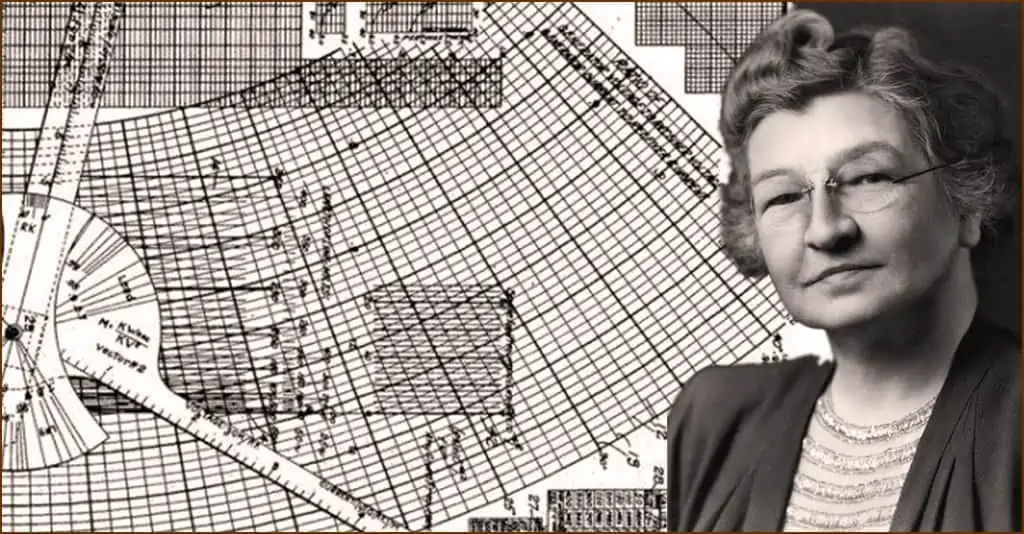
Orphaned in 1895 in Baltimore, Edith Clarke excelled in mathematics and dreamed of being an electrical engineer at a time when there were no female engineers in that burgeoning new field of technology. Ultimately she went into the Hall of Fame as one of the most important electrical engineers of the 20th century and was also America’s first female university engineering professor.
For most of us, America’s vast electrical infrastructure is something we take for granted, rarely think about until it goes down, and don’t really understand. But for Edith Clarke it was the stuff of dreams. A pioneer in electrical engineering, and role model for every young woman pursuing a STEM education today, she used the power of math to improve our understanding of power transmission at a time when engineering was a man’s world and women just didn’t “do” science.