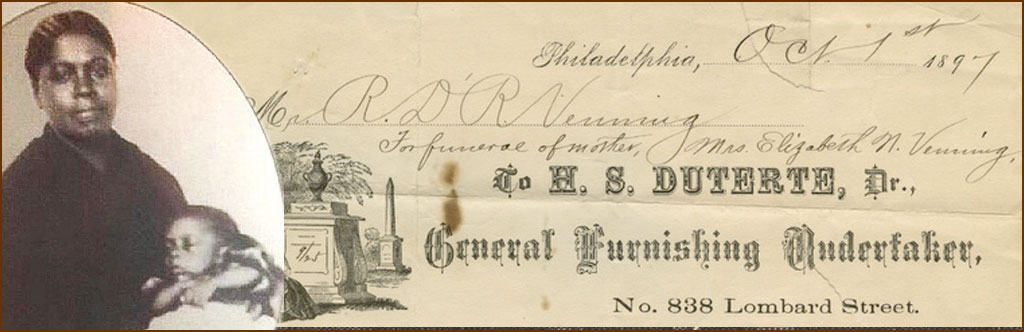
Henrietta Duterte was the first African-American woman to own a funeral home.
A facilitator for runaway slaves traveling north on the underground railroad in the early 19th century, Henrietta Duterte also made local and national history in the business of burying the dead.
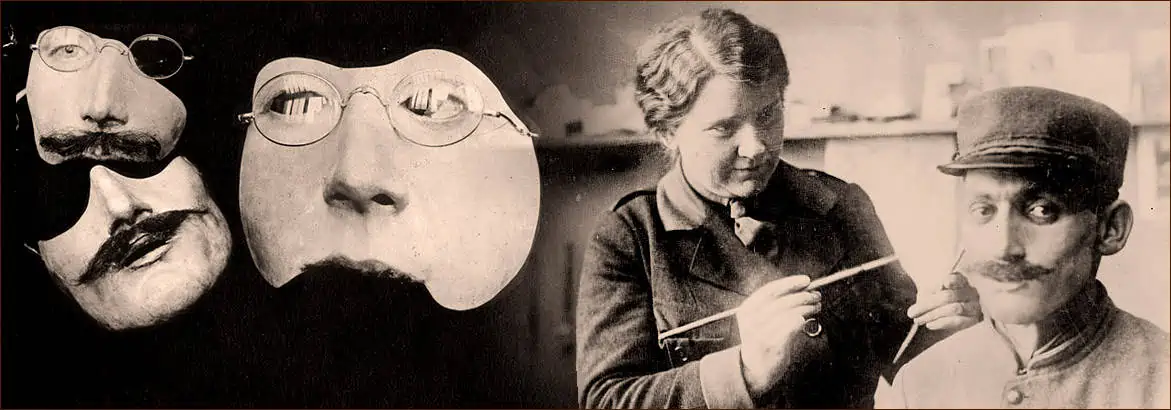
Before the modern age facial reconstruction and plastic surgery, Anna Coleman Ladd was one of a handful of unique artisans in World War I who created highly detailed masks to hide severely mutilated soldiers’ facial wounds.
Philadelphia-born Anna Coleman Ladd is best known for her neoclassical portrait busts and bronze sculptures of sprites frolicking in public fountains. But her greatest work — and her most important legacy — was restoring the self-respect, honor and dignity to World War I veterans known by the French as “the men with the broken faces.”
Aimée Crocker was a fabulously wealthy 19th-century railroad heiress who shocked U.S. society with her continent-hopping antics and bohemian eccentricities.
By the time 19th century Bohemian Aimée Crocker’s wild ride of a life was over, this was her name history: Aimée Crocker Ashe Gillig Gouraud Miskinoff Galitzine. But when it comes to surnames or husbands, who’s counting? This late 1800’s railroad heiress was born into enormous wealth in 1864, when women were expected to be shy, docile, retiring creatures who graciously accepted their roles as quiet spectators in the game of life. But shy, docile and retiring were simply not part of Crocker’s DNA.
As she became one of the 20th century’s most famous photographers, Margaret Bourke-White broke down barriers that previously limited photojournalist opportunities for U.S. females. Above are images of her photo on the cover of the first edition of LIFE magazine in 1936, and a shot of her in her aviation gear at the start of World War II.
Margaret Bourke-White, who entered college in the 1920s with the idea of becoming a Herpetologist, could have made a name for herself handling snakes. Instead, she picked up a camera and went on to become a groundbreaking female photojournalist, giving us some of the most iconic images of the 20th century.
Funded by the WPA during the Great Depression, horse-pack librarians took books and magazines to people living in remote Appalachian mountain settlements often reachable only by foot paths.
Determined to increase literacy and boost morale in the backwoods of Depression era Appalachia, hundreds of Pack Horse Librarians, with saddlebags jammed full of books, headed out for some of county’s most impoverished and isolated communities.
Rosalie Edge was one of the most active and effective conservationists of the 20th century, with a particular interest in protecting wild birds from mass killings by agricultural and industrial interests.
If visitors to New York’s Woodlawn Cemetery in the Spring of 2018 felt the ground shift a little beneath their feet, it was probably just Mabel Rosalie Barrow Edge — once known as America’s most militant conservationist — rolling in her grave.